Choosing a Dtf Printer Uv Printer setup is less about finding a universal winner and more about matching the process to the product. For apparel, direct-to-film (DTF) printing creates a transfer that is heat-pressed onto fabric. It suits detailed artwork, short runs, and different garment colors. The transfer film has a feel. That matters. UV printing instead cures ink directly onto compatible surfaces, such as phone cases, acrylic panels, and promotional items. It is not a like-for-like replacement for DTF on clothing.
Demand for customization provides useful context. Grand View Research’s Custom T-shirt Printing Market report valued the global market at USD 4.31 billion in 2022 and projected an 11.1% compound annual growth rate from 2023 to 2030. That estimate describes the market, not a guarantee of profit or a direct comparison between printer types. Still, it signals why shops are weighing flexible production options.
A DTF printer may make sense when fabric orders dominate and customers expect full-color designs across varied garment types. A UV printer may be the better fit when jobs involve rigid items and direct surface decoration. There are trade-offs. DTF adds film, powder, and a heat-press step; UV work depends on material compatibility and careful setup. Neither workflow is effortless, and production costs vary by equipment, consumables, labor, and order volume. Before choosing, compare sample prints, maintenance needs, and the actual products customers request. The right answer can be less exciting than the sales pitch—and more useful.
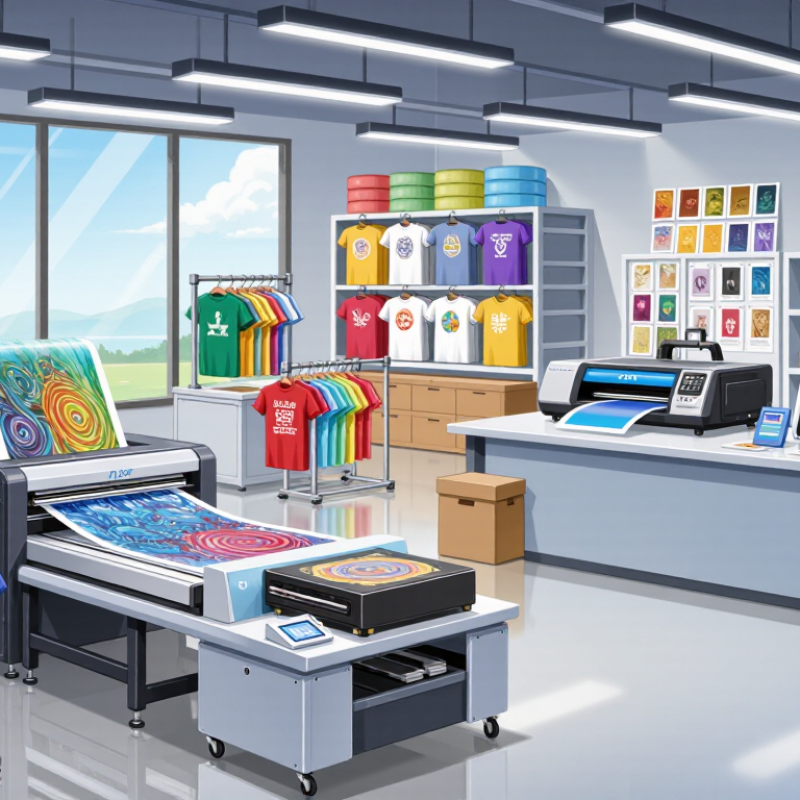
DTF and UV printing both start with a digital file, but they place ink differently. A DTF printer lays colored and white ink onto a release film. Hot-melt adhesive powder is added, then cured. A heat press transfers the printed layer onto fabric, and the film is peeled away. This process suits cotton, polyester, blends, and detailed designs on shirts or bags. Small details matter. Uneven pressure or unsuitable heat can leave weak edges, so test pressing is worth the extra time.
A UV printer deposits UV-curable ink directly onto an object or sheet. Ultraviolet lamps cure the ink almost immediately. This method is commonly used for rigid products, such as signs, panels, and phone cases. Surface texture, height, and coating affect adhesion; some materials need primer. Unlike DTF, UV printing uses no textile transfer film or adhesive powder. The distinction is practical, not absolute.
Grand View Research estimated the global digital textile printing market at USD 2.7 billion in 2023 and forecast a 12.8% compound annual growth rate from 2024 to 2030. That report tracks textile printing broadly, not DTF alone, so it indicates market activity rather than proving one process is better.
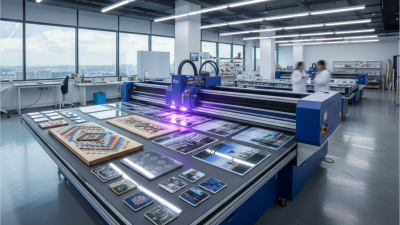
DTF and UV printing solve different substrate problems. DTF prints an image onto PET film, applies adhesive powder, then transfers it to fabric with a heat press. It suits cotton, polyester, and many blends, including dark shirts that need a white underbase. Textile Exchange’s Materials Market Report 2024 estimates global fiber production reached 124 million tonnes in 2023, with polyester making up 57%. That mix makes fabric compatibility a practical buying question, not a minor detail.
A standard UV printer cures ink directly on a surface, making it useful for rigid items such as acrylic, wood, or coated metal. But surface energy, texture, and coatings can affect adhesion; test the exact material before a production run. UV-DTF is different: it creates a transfer that can be applied to some hard, curved objects. It is not the same process as garment DTF. One detail is easy to overlook: a transfer may adhere well yet still feel wrong on a soft, stretchy shirt.
Tips: Match the method to the finished item. For garments, press a small test patch and check stretch, wash durability, and edge lift. For rigid goods, test adhesion and abrasion after curing. Keep notes on temperature, pressure, and dwell time; small changes can matter. DTF is not universal, and neither is UV.
DTF and UV printing solve different problems, even when both produce vivid, detailed graphics. DTF prints a design onto film, then transfers it to fabric with adhesive powder and heat. The result can flex with a cotton T-shirt, though a thick transfer may feel noticeable. UV ink cures under ultraviolet light and bonds to a surface, making it useful for signs, acrylic panels, and coated objects. It can create crisp detail and raised texture. Not every substrate grips equally well; surface preparation matters.
Durability depends on testing, not appearance alone. For garments, laundering and rubbing can reveal cracking, fading, or color transfer; ISO 105-C06 and ISO 105-X12 describe relevant colorfastness tests. UV prints need adhesion and abrasion checks on the actual material. A smooth acrylic panel and a textured plastic case may behave differently. Grand View Research estimated the digital textile printing market at USD 2.7 billion in 2022 and forecast 12.1% annual growth through 2030. That market signal does not prove DTF outlasts UV. It does show why fabric workflows matter. Honestly, the best choice can be less obvious than a sample suggests: test the finished item, not just the print.
| Comparison Dimension | DTF Printing | UV Printing |
|---|---|---|
| How the Image Is Produced | Ink is printed onto a release film, typically with adhesive powder, then heat-pressed onto the item. | UV-curable ink is deposited onto a surface and cured with ultraviolet light. UV-DTF systems print a transfer that is applied to an item. |
| Best-Suited Applications | Decorating garments and other compatible textiles, including cotton, polyester, and many blends. | Printing directly on suitable rigid or semi-rigid objects, such as signs, panels, promotional items, and product surfaces. |
| Substrate Compatibility | Designed primarily for fabrics. It can work across light and dark textiles when the print setup and transfer process are appropriate. | Can print on many non-porous and porous materials, but surface preparation, adhesion, and material compatibility should be tested. |
| Print Appearance | Can reproduce full-color artwork, fine details, and white underbases. The result sits on the fabric rather than dyeing it. | Can produce detailed, opaque graphics and may support gloss or textured effects, depending on the printer and ink configuration. |
| Hand Feel and Surface | Creates a transfer layer on the fabric. Larger, solid areas may feel more noticeable than smaller or less ink-heavy designs. | Forms a cured ink layer on the printed surface. The finish is generally on top of the material and can feel raised, especially with heavier ink deposits. |
| Durability Factors | Wash performance depends on film, ink, adhesive, curing, heat-press settings, fabric, and care. Follow the transfer supplier’s care guidance and test before production. | Scratch, chemical, and outdoor resistance depend on ink formulation, curing, substrate, surface preparation, and exposure conditions. Testing is recommended for the intended use. |
| Flexibility | Suitable for many wearable designs, but the transfer’s stretch and recovery depend on its construction and the fabric. Excessive stretching can damage a print. | Standard direct UV prints are typically less suited to repeatedly stretched fabrics. Flexible UV inks or transfer methods may suit some applications, subject to testing. |
| Production Workflow | Requires film printing, adhesive application, curing, and heat pressing. Transfers can be prepared before they are applied to garments. | Direct UV printing usually requires positioning the object on the printer and curing during printing. UV-DTF adds a transfer application step. |
| Common Limitations | Not a direct-to-fabric process; transfer feel and wash life vary. Heat-sensitive garments and unusual fabrics may need testing. | Adhesion may be poor on some surfaces without suitable preparation. Direct printing is limited by object size, shape, and printer clearance. |
| Choose It When | Your main goal is full-color decoration on apparel or other compatible fabrics, and a heat-applied transfer workflow fits production. | Your main goal is printing on compatible hard goods or objects, and direct surface printing or a UV transfer workflow is appropriate. |
Note: Results vary by equipment, consumables, substrate, artwork, and operating conditions. Confirm compatibility and durability with production samples before committing to a large run.
A DTF printer can make more sense when most orders are garments, especially cotton or polyester shirts. Its workflow turns artwork into a film transfer, which is then powdered, cured, and heat-pressed onto fabric. The printer is only part of the setup: budget for film, ink, powder, a curing unit, and a reliable heat press. Small batches matter. If orders vary in design, printing transfers ahead can reduce garment setup time.
A UV printer works differently. It applies ink directly to objects such as phone cases, signs, or flat panels. That flexibility can justify its cost when your production centers on rigid goods, but fixtures, surface preparation, and careful object handling may add time. A curved item, for example, may need a different setup from a flat panel. UV equipment is not automatically the cheaper choice just because it skips transfer film.
Compare the full workflow, not just printer prices. DTF suits shops that need repeatable apparel transfers and can manage powder curing and pressing. UV suits businesses handling varied hard surfaces and direct-to-object jobs. Maintenance, workspace, and operator time affect the real cost per order. A mixed product catalog can complicate the decision; neither system covers every job equally well. Estimate a typical week of orders before choosing, and leave room for the numbers to surprise you.
Equipment costs, workflow, and production needs
DTF is generally better suited to garment transfers, while UV printing is designed for printing directly onto many rigid objects. Ratings are qualitative comparisons of typical use cases—not measured performance benchmarks or price quotes. Actual equipment costs and workflows vary by printer size, configuration, and production setup.
When a DTF Printer Is the Better Choice
Choose DTF when your main work is decorating garments, not printing directly onto rigid objects. It prints a design onto film, which is then transferred to fabric with heat and pressure. That makes it practical for short apparel runs, names, small graphics, and mixed garment orders. A UV printer is usually better suited to flat or shaped hard surfaces, such as signs and product panels. The transfer can feel slightly raised on a shirt; that detail is easy to underestimate when assessing a sample.
Demand is worth watching, but market growth alone does not prove one process is right for your shop. Grand View Research’s 2024 Digital Textile Printing Market report projects a 12.1% compound annual growth rate for the market from 2024 to 2030. For a DTF investment, test your actual fabrics, artwork, and order sizes before committing. Dark cotton, for example, may need a white underbase, while fine lettering can expose limits in film transfer and pressing. Results depend on settings and materials.
Tips: Press a sample, wash it, then check stretch, edges, and hand feel. Compare the finished garment with a UV-printed sample on the substrate you actually sell.