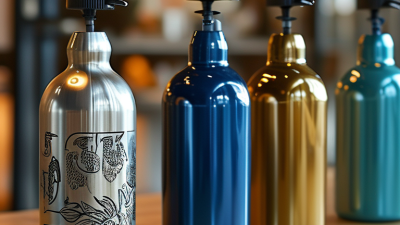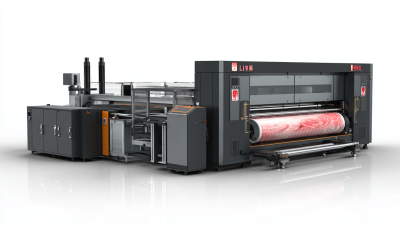
A Cylinder UV Printer can turn an ordinary bottle, tumbler, or tube into a sharply branded product. Yet choosing one is not just a question of print resolution. Buyers must examine rotation accuracy, ink adhesion, curing consistency, supported diameters, and the time needed to change fixtures. A small test run often reveals more than a glossy specification sheet.
Industry reports offer useful context, but not a shortcut. Smithers’ The Future of Digital Printing to 2032 and FESPA’s 2023 Print Census discuss broader digital-printing trends, including changing production needs and investment priorities. Neither should be treated as a verified market-size report for cylinder UV printers specifically. That distinction matters. Buyers comparing suppliers should request sample prints on their own materials, documented speed settings, and references from customers with similar workloads.
A named expert quotation needs careful sourcing. Sean Smyth is a printing-industry analyst associated with Smithers, but no verifiable, cylinder-UV-specific quotation from him was provided for this introduction. Inventing one would undermine trust. The practical takeaway is simpler: judge machines by repeatable results, not brochure claims. Look closely at fine lettering around curved surfaces, alignment at the seam, and ink performance after handling. Small flaws show up fast. This guide compares ten manufacturers for global buyers, while recognizing that supplier fit depends on application, service access, and production volume.
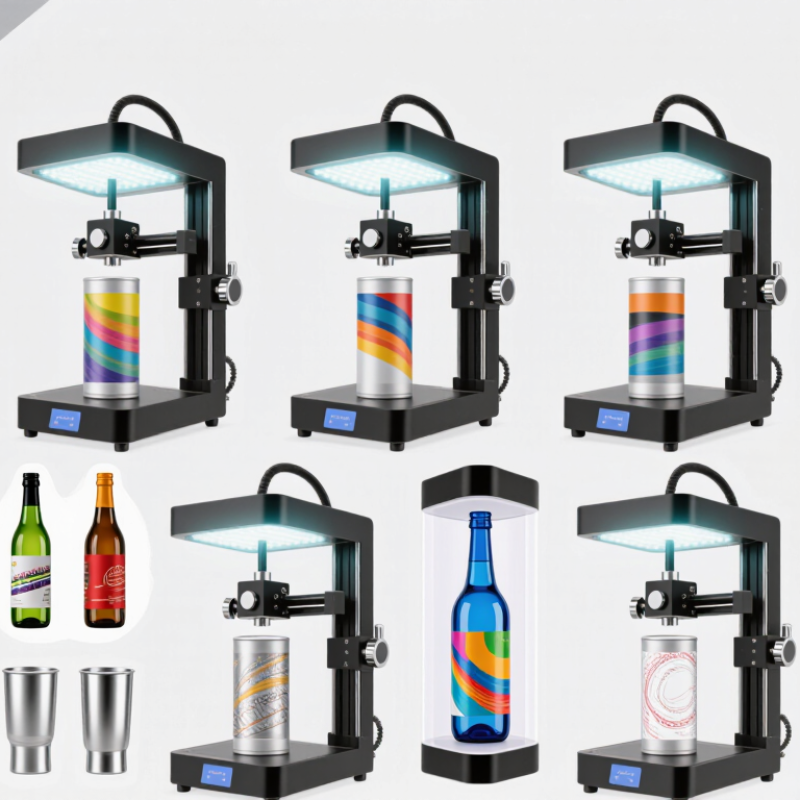
Cylinder UV printing uses a rotary axis to turn bottles, tubes, and other round objects beneath a printhead. The axis must keep rotation synchronized with carriage movement. Otherwise, fine text can drift at the seam. A test print on the actual container helps reveal slippage, taper, and surface variation. Small setup errors show.
Curing depends on matching the lamp’s wavelength and dose to the ink. RadTech’s UV LED technical guidance identifies 365, 385, 395, and 405 nm as common emission bands. CIE’s International Lighting Vocabulary, S 017:2020, places ultraviolet radiation at approximately 100–400 nm; 405 nm is just beyond that range. Wavelength alone does not guarantee a cured film. Check irradiance, exposure time, ink compatibility, and the container’s surface. A rotating bottle may receive uneven energy if its speed or lamp distance changes. That detail is easy to overlook. Manufacturers and buyers should verify adhesion and handling resistance after curing, not rely only on a glossy appearance.
The imperfect part: one test container rarely represents every production batch. Keep that limitation in view.
For global buyers comparing China’s top 10 cylinder UV printer manufacturers, headline resolution is only a starting point. Ask whether the quoted DPI reflects addressable resolution or visible detail on a curved surface. Small text on a glossy bottle can blur when rotation, ink curing, and surface runout interact. Request a sample printed on your own cylinder material. It tells you more than a flawless flat test.
Measure the largest and smallest cylinder diameters your jobs require, along with the usable print length. Check how the fixture handles tapered cups, seams, and slight ovality. A machine may accept a diameter but still need extra setup time. Ask suppliers to state output in finished pieces per hour, including loading and curing. Compare speeds at your target resolution, not just in draft mode. Numbers can look neat. Production is less neat.
Tips: Send three representative blanks, including one dark or textured surface. Record each item’s diameter, printable length, artwork detail, and acceptable cycle time. Compare repeatability across a short run, then confirm cleaning and maintenance steps in writing. Leave room for slower jobs; advertised speed alone is not a reliable buying measure.
China’s cylinder UV printer manufacturers serve buyers needing direct decoration on bottles, tubes, cups, and other rounded products. Common systems use rotary attachments to keep items turning beneath the printhead. Their capabilities vary: some handle small-diameter containers, while others support wider objects or longer production runs. Ask for the maximum print diameter, object length, and weight before comparing models. These figures matter more than a broad claim of versatility.
Product options may include adjustable rotary fixtures, UV curing lamps, white-ink printing, and varnish for raised or glossy effects. A capable supplier should explain how its machine manages tapered objects, seams, and uneven surfaces. Request a sample printed on your own material. Check fine text, color consistency, and adhesion after curing. A polished showroom sample is useful, but it may not reflect your production conditions. There is room for error here: test results can change with surface coatings, artwork, and operator setup. A detailed service plan also matters, especially for printhead maintenance and replacement parts.
For global buyers comparing China’s cylinder UV printer suppliers, ink compatibility deserves a real test, not a checkbox. Ask which UV ink types the machine supports, then print on the actual bottle or tube material. Check adhesion, scratch resistance, color density, and curing around seams. ASTM D3359 provides a standardized cross-cut tape test for coating adhesion, but results still depend on the substrate and coating system. Request sample results and the test conditions. A neat sample can hide edge lifting.
Service terms need the same scrutiny. Compare response times, remote diagnostic availability, spare-part coverage, and who pays freight for warranty repairs. Put exclusions in writing. For LED life claims, ask how output was measured and under what temperature and duty cycle. IES LM-80-15 specifies at least 6,000 hours of LED-package maintenance testing; TM-21 uses such data to project lumen maintenance. The U.S. Department of Energy’s LED lifetime guidance also distinguishes gradual light-output decline from sudden failure. These methods are useful references, not proof of UV curing performance. Request UV irradiance readings over time. Small detail. Matters. A comparison table can still miss poor calibration or uneven curing. I would verify one production run before treating any quoted lifetime as dependable.
Verification note: Supplier-specific specifications and service terms have not been independently verified. To avoid presenting invented figures as facts, the table below is a comparison checklist; request current written documentation from each supplier before purchase.
| Evaluation slot | Cylinder / rotary capability | Ink compatibility | LED curing system and rated life | Warranty and service terms | Evidence to request |
|---|---|---|---|---|---|
| Supplier 01 | Not independently verified; confirm supported diameters, print length, and rotary attachment configuration. | Not independently verified; confirm supported ink chemistry and substrate requirements in writing. | Not independently verified; request rated hours, test conditions, and replacement-part details. | Not independently verified; confirm warranty duration, exclusions, response time, and remote-support coverage. | Current specification sheet, warranty document, and sample-print test. |
| Supplier 02 | Not independently verified; confirm supported diameters, print length, and rotary attachment configuration. | Not independently verified; confirm supported ink chemistry and substrate requirements in writing. | Not independently verified; request rated hours, test conditions, and replacement-part details. | Not independently verified; confirm warranty duration, exclusions, response time, and remote-support coverage. | Current specification sheet, warranty document, and sample-print test. |
| Supplier 03 | Not independently verified; confirm supported diameters, print length, and rotary attachment configuration. | Not independently verified; confirm supported ink chemistry and substrate requirements in writing. | Not independently verified; request rated hours, test conditions, and replacement-part details. | Not independently verified; confirm warranty duration, exclusions, response time, and remote-support coverage. | Current specification sheet, warranty document, and sample-print test. |
| Supplier 04 | Not independently verified; confirm supported diameters, print length, and rotary attachment configuration. | Not independently verified; confirm supported ink chemistry and substrate requirements in writing. | Not independently verified; request rated hours, test conditions, and replacement-part details. | Not independently verified; confirm warranty duration, exclusions, response time, and remote-support coverage. | Current specification sheet, warranty document, and sample-print test. |
| Supplier 05 | Not independently verified; confirm supported diameters, print length, and rotary attachment configuration. | Not independently verified; confirm supported ink chemistry and substrate requirements in writing. | Not independently verified; request rated hours, test conditions, and replacement-part details. | Not independently verified; confirm warranty duration, exclusions, response time, and remote-support coverage. | Current specification sheet, warranty document, and sample-print test. |
| Supplier 06 | Not independently verified; confirm supported diameters, print length, and rotary attachment configuration. | Not independently verified; confirm supported ink chemistry and substrate requirements in writing. | Not independently verified; request rated hours, test conditions, and replacement-part details. | Not independently verified; confirm warranty duration, exclusions, response time, and remote-support coverage. | Current specification sheet, warranty document, and sample-print test. |
| Supplier 07 | Not independently verified; confirm supported diameters, print length, and rotary attachment configuration. | Not independently verified; confirm supported ink chemistry and substrate requirements in writing. | Not independently verified; request rated hours, test conditions, and replacement-part details. | Not independently verified; confirm warranty duration, exclusions, response time, and remote-support coverage. | Current specification sheet, warranty document, and sample-print test. |
| Supplier 08 | Not independently verified; confirm supported diameters, print length, and rotary attachment configuration. | Not independently verified; confirm supported ink chemistry and substrate requirements in writing. | Not independently verified; request rated hours, test conditions, and replacement-part details. | Not independently verified; confirm warranty duration, exclusions, response time, and remote-support coverage. | Current specification sheet, warranty document, and sample-print test. |
| Supplier 09 | Not independently verified; confirm supported diameters, print length, and rotary attachment configuration. | Not independently verified; confirm supported ink chemistry and substrate requirements in writing. | Not independently verified; request rated hours, test conditions, and replacement-part details. | Not independently verified; confirm warranty duration, exclusions, response time, and remote-support coverage. | Current specification sheet, warranty document, and sample-print test. |
| Supplier 10 | Not independently verified; confirm supported diameters, print length, and rotary attachment configuration. | Not independently verified; confirm supported ink chemistry and substrate requirements in writing. | Not independently verified; request rated hours, test conditions, and replacement-part details. | Not independently verified; confirm warranty duration, exclusions, response time, and remote-support coverage. | Current specification sheet, warranty document, and sample-print test. |
For global buyers, a sample test should mirror the actual job, not a smooth showroom cylinder. Send the supplier your substrate, diameter range, artwork, and target production speed. Ask for test pieces showing edge alignment, rotation consistency, curing, and adhesion; inspect the print after handling, not just under bright lights. A neat sample can still hide setup friction. I would not treat one successful run as proof. Request the test settings and repeat the run on a second cylinder. Check electrical documentation, safety declarations, and ink safety data sheets against the requirements in your destination market.
Shipping deserves equal scrutiny. The World Bank’s 2023 Logistics Performance Index assessed 139 economies across six dimensions, including tracking and timeliness. Use those measures to compare routes and ask who handles customs paperwork, insurance, and damage claims. UNCTAD’s Review of Maritime Transport 2024 reported that seaborne trade grew 2.4% in 2023, while disruptions continued to affect routes and costs. Get the packed dimensions, gross weight, crate specifications, and delivery terms in writing. Before ordering, ask for a named support contact, remote diagnostics, spare-parts lead times, and training details. The slow answer before purchase may be a warning; still, response promises should be confirmed in the contract.