How to Choose the Best Big UV Printer for Your Business?
Choosing the right Big UV Printer can transform your business. In the words of industry expert Mark Thompson, "Investing in a Big UV Printer is a game-changer for printing quality." Businesses face many options today, making selection challenging. Understanding your unique needs can simplify the decision.
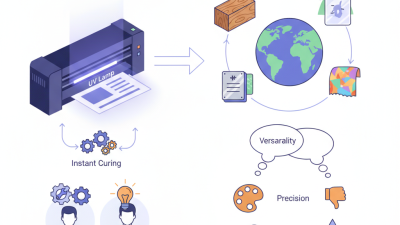
Quality, versatility, and price are key factors. Examine what materials you plan to print on. A good Big UV Printer should handle various substrates, from glass to wood. Look for features that complement your workflow. However, beware of flashy marketing. Not every printer delivers what it promises.
Consider maintenance and support too. Some models require more upkeep than others. This can affect your budget and productivity. Take time to reflect on these aspects. A suitable Big UV Printer can propel your projects forward, but an ill-fitted choice can lead to frustration. Your decision should be informed and strategic.
Understanding the Different Types of Big UV Printers Available
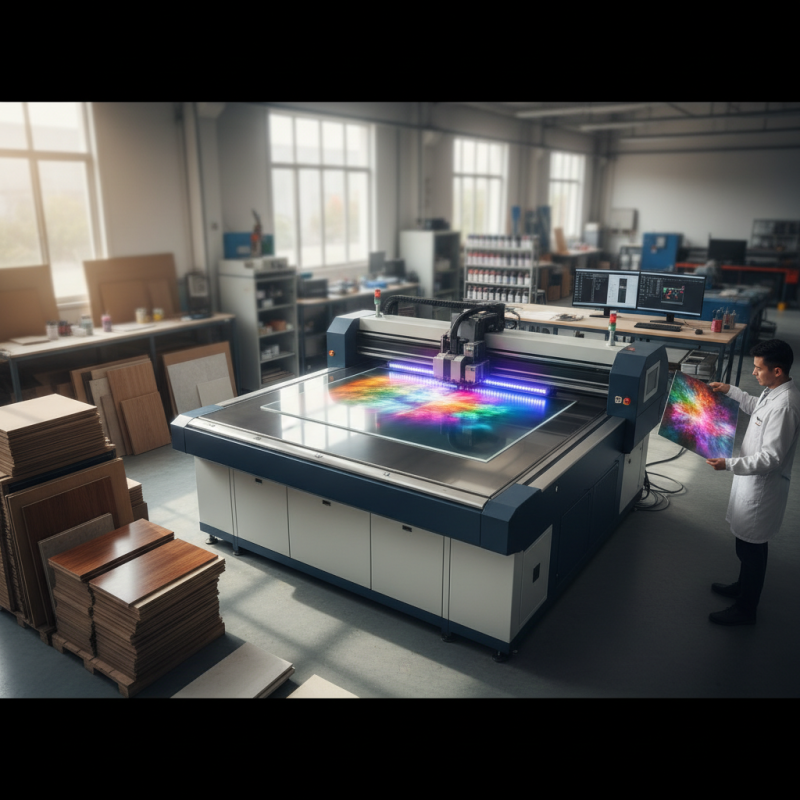
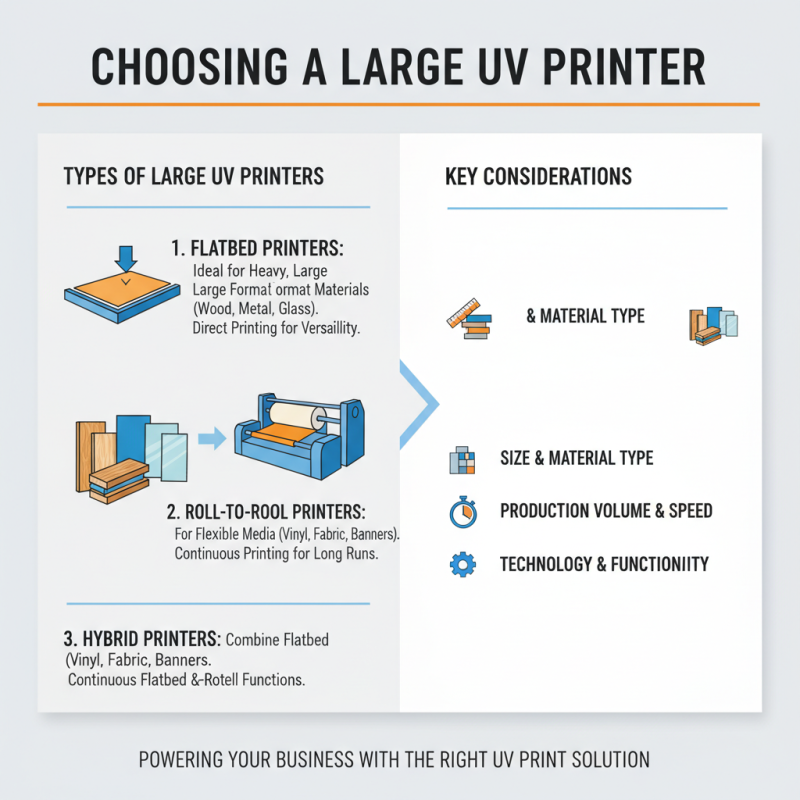
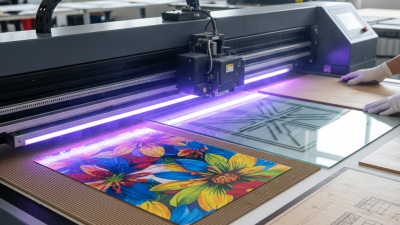
When selecting a big UV printer for your business, it's important to understand the different types available. These printers differ in size, function, and technology, each suited for specific needs. Flatbed printers are ideal for heavy materials and large formats. They can print directly onto substances like wood and metal. This provides great versatility.
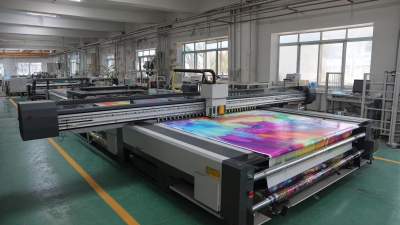
Roll-to-roll printers specialize in flexible media, such as vinyl or fabric. They are perfect for creating banners and signs. However, they might lack the rigid capabilities of flatbeds. Some printers combine both features. This hybrid approach allows for diverse projects but may come at a premium price.
**Tip:** Evaluate your most common projects. This will help you decide the type of printer you need. Consider your workspace as well. A large printer requires ample space.
**Tip:** Don't forget about maintenance. More complicated technology can mean more frequent repairs. Sometimes, simpler machines offer better longevity. Reflect on how much printing you do. It can impact your choice greatly.
Key Features to Consider When Selecting a UV Printer for Your Business
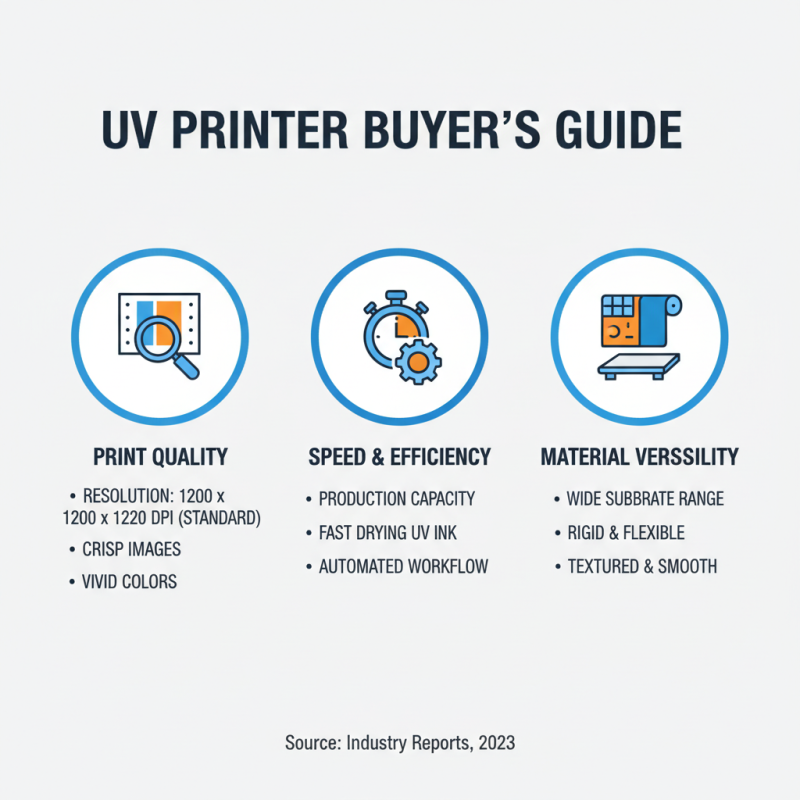
When selecting a UV printer for your business, there are key features to consider. First, print quality is paramount. A printer's resolution directly impacts the sharpness and vibrancy of prints. According to industry reports, a resolution of 1200 x 1200 DPI is becoming a standard for professional use. This ensures crisp images and vivid colors, essential for attracting customers.
Another crucial aspect is the media handling capability. A versatile UV printer can accommodate various materials like acrylic, wood, and metal. Many businesses find that a printer which supports a wide range of substrates enhances creativity and offers more services. However, not all printers perform well on every media type. Research indicates that about 30% of operators express dissatisfaction with printers that struggle with certain materials.
Additionally, consider the printing speed. Productivity is key in competitive markets. A printer that can handle high-volume jobs efficiently saves time and labor costs. Ideally, look for models that offer at least 100 square feet per hour. Yet, speed shouldn't compromise quality. Operators report that high speeds can lead to issues, such as ink smudging or incomplete curing. Balancing speed and quality often requires careful evaluation and testing.
Evaluating the Cost vs. Value of Big UV Printers for Your Operations
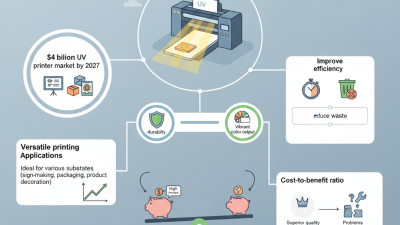
When evaluating big UV printers for your business, cost and value are key factors. According to a recent market report, nearly 45% of businesses cite initial costs as a major barrier. However, understanding the long-term benefits can outweigh these initial investments. For instance, big UV printers often offer versatile printing capabilities, allowing for multiple substrates. This can lead to increased production and, ultimately, higher revenue.
The average lifespan of high-quality big UV printers is roughly seven to ten years, depending on usage. Businesses should consider this when assessing the total cost of ownership. Maintenance costs can also vary widely. A single maintenance event can cost upwards of 10% of the printer's price. Thus, thorough planning is essential.
Many businesses overlook the importance of ROI. A well-chosen printer can provide savings in labor and material costs. Reports suggest that companies save 20-30% by opting for efficient models. However, some may find it challenging to track these savings accurately. Regular review of their printing operations can reflect the real impact of their investment.
Cost vs. Value of Big UV Printers
Assessing Print Quality and Speed in UV Printer Performance
When assessing print quality and speed in UV printer performance, it’s essential to consider various factors. Print quality largely relies on the resolution and color accuracy of the printer. A report by the International Imaging Industry Association (I3A) shows that a printer with 1200 dpi can produce stunning images with fine details. Higher resolutions can be tempting. However, they may lead to longer printing times. This trade-off can affect your workflow and business efficiency.
Speed is also crucial in determining the best printer for your needs. According to a study by the Printing Industries of America (PIA), a printer operating at 35 square meters per hour can significantly enhance productivity. Yet, some users find that speed alone does not guarantee better output. In fact, printers that sacrifice quality for speed may produce grainy images and inaccurate colors.
Additionally, consider how the materials you are using may impact performance. Some UV inks can cure faster than others, affecting throughput. It's crucial to test different combinations of inks and substrates for optimal results. Many businesses overlook these details. Achieving a balance between quality and speed requires careful evaluation and sometimes difficult choices.
How to Choose the Best Big UV Printer for Your Business? - Assessing Print Quality and Speed in UV Printer Performance
| Printer Model |
Print Quality (DPI) |
Print Speed (m²/h) |
Maximum Media Size (cm) |
Suitable Materials |
| Model A |
1440 |
65 |
250 |
Plastic, Wood, Metal |
| Model B |
1200 |
50 |
200 |
Vinyl, Glass |
| Model C |
1600 |
70 |
300 |
Textiles, Cardboard |
| Model D |
1800 |
75 |
250 |
Wood, Fabric, PVC |
| Model E |
1500 |
55 |
210 |
Metal, Acrylic |
Maintenance and Support Factors for Long-Term Printer Reliability
When selecting a big UV printer, maintenance and support are critical for long-term reliability. A study by Smithers Pira indicates that efficient maintenance can improve printer lifespan by 30%. Frequent maintenance checks can prevent costly downtimes. For businesses that rely on printing, every hour offline can mean lost revenue.
Tips for maintenance: Regularly clean the print heads. Check for ink blockages. Monitor wear on components. Keeping a checklist can help track maintenance tasks effectively.
Analyzing support options is equally essential. Businesses should evaluate the response time of support services. A delayed response can prolong downtimes. According to a report by Freedonia Group, businesses that have reliable support experience 25% fewer production disruptions. It's wise to choose a supplier with a solid track record in customer service.
Tips for support: Ask about warranty options. Understand training resources available. Ensure remote assistance is offered. This proactive approach reinforces printer performance and enhances overall operational efficiency.