How to Choose the Best UV Flatbed Printer for Your Business Needs
Choosing the right UV flatbed printer is crucial for businesses seeking to enhance their printing capabilities and expand their services. According to a recent report by Smithers Pira, the global market for UV printing is projected to reach $5.3 billion by 2025, driven by increasing demand for high-quality, durable prints across various industries. This indicates a significant growth trajectory, making the selection of appropriate UV flatbed technology essential for businesses aiming to stay competitive.
Industry experts, such as Mark McCarthy, a renowned figure in digital printing technologies, emphasize the importance of careful evaluation when choosing a UV flatbed printer. He states, "Investing in the right UV flatbed printer can dramatically influence your production efficiency and quality output." Therefore, understanding key factors, including print speed, substrate versatility, and overall cost of ownership, is vital for making an informed decision. As businesses navigate this burgeoning landscape, their choice of UV flatbed printer will ultimately shape their operational success and market positioning.

Understanding UV Flatbed Printing Technology and Its Benefits
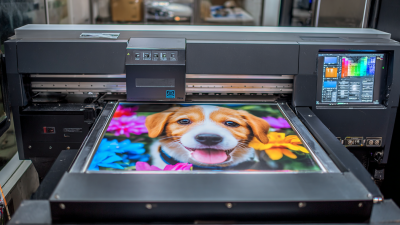
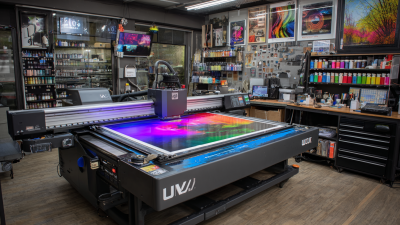
UV flatbed printing technology has revolutionized the printing industry by enabling high-quality prints on a wide variety of substrates, including wood, metal, glass, and plastic. This technology employs ultraviolet light to cure (or dry) the ink as it is printed, allowing for immediately usable products with vibrant colors and crisp details. According to a report by Smithers Pira, the global market for UV printing is expected to grow from approximately $3.2 billion in 2021 to over $4.8 billion by 2026, driven by the rising demand for sustainable printing techniques and higher production speeds.
One of the key benefits of UV flatbed printing is its versatility. Businesses can print customized designs on different materials, catering to diverse customer needs. Additionally, UV printers can produce not only standard images but also tactile effects that enhance the visual appeal of the printed product. The durability of UV inks, which are resistant to fading and scratching, makes them suitable for both indoor and outdoor applications. A study from Allied Market Research indicates that the market for durable goods printed with UV technology is projected to witness substantial growth, further emphasizing the importance of adopting this technology for businesses aiming to stay competitive in a rapidly evolving market landscape.
Key Factors to Consider When Selecting a UV Flatbed Printer
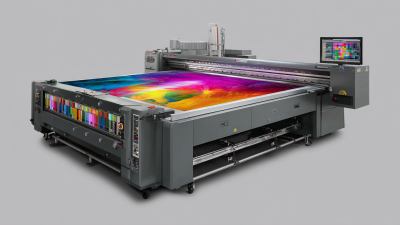
When selecting a UV flatbed printer for your business needs, several key factors should influence your decision-making process. First, consider the size of the printer and the types of materials you wish to print on. UV flatbed printers can accommodate various substrates, ranging from wood to glass to metal. Understanding the dimensions and weight capacity of the printer will help you determine if it aligns with your production requirements and workspace limitations.
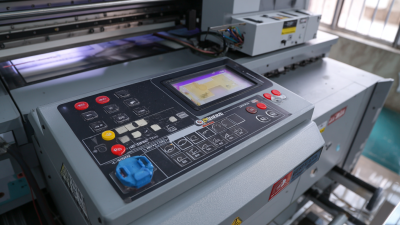
Another critical factor is the printer's resolution and speed. Higher resolution is essential for producing detailed images and high-quality finishes, while speed is crucial for maintaining efficiency in high-volume production environments. Balancing these two aspects based on your business's specific demands can significantly affect your operational workflow.
**Tips**: Always assess the printer's maintenance needs and availability of replacement parts. Printers that require frequent servicing can lead to costly downtime, impacting your overall productivity. Additionally, consider investing in user-friendly software that allows for easy design and management of printing jobs, enabling your team to maximize the printer's capabilities with fewer errors.
Comparison of Key Features in UV Flatbed Printers
Evaluating Print Quality: Resolution, Speed, and Color Accuracy
When selecting a UV flatbed printer for your business, evaluating print quality is paramount. Key factors to consider include resolution, speed, and color accuracy. The print resolution, measured in dots per inch (DPI), directly affects the sharpness and clarity of the printed images. In the industry, printers with a DPI of 1200 or more are often recommended for achieving high-quality outputs, particularly for detailed graphics and fine text. A report from Smithers Pira indicates that printers with higher resolution not only excel in producing detailed marketing materials but also enhance customer satisfaction due to the visually striking results they produce.
Speed is another critical component in determining the effectiveness of a UV flatbed printer. According to a study by the International Digital Enterprise Alliance (IDEAlliance), the average production speed for high-end UV flatbed printers can range from 100 to 300 square feet per hour. Businesses must assess their workflow requirements, as a printer that can operate efficiently at higher speeds will significantly increase productivity during peak periods. Alongside speed, color accuracy is essential to ensuring that designs are reproduced faithfully. Using color management systems and high-quality inks can elevate a printer’s capacity to achieve vivid colors and consistent results, thus meeting the demands of clients who expect precise brand color matching and professional presentation.
Assessing Cost-Effectiveness and Return on Investment (ROI)
When considering the purchase of a UV flatbed printer for your business, a thorough assessment of cost-effectiveness and return on investment (ROI) is crucial. The initial investment in a quality UV flatbed printer can range from $20,000 to upwards of $100,000, depending on the model and its capabilities. However, according to a 2022 market research report by Smithers Pira, businesses that strategically invest in high-quality printing technology can expect to see an ROI of up to 300% over a three-year period. This significant return can be attributed to the printer's versatility, enabling businesses to expand their service offerings and capture a broader client base across various industries.
Operating costs also play a pivotal role in determining the overall cost-effectiveness of a UV flatbed printer. While these printers typically utilize more expensive inks, the ability to print on a wide range of substrates—including wood, glass, and metal—reduces the need for multiple devices and significant overhead costs associated with managing diverse equipment. Data from the 2023 Printing Industries of America reveals that businesses leveraging UV technology can reduce material waste by up to 50% compared to traditional printing methods, further enhancing profitability. Thus, when evaluating potential printers, it is essential to not only consider the upfront costs but also the long-term savings and revenue generation opportunities that UV flatbed printers can provide.
How to Choose the Best UV Flatbed Printer for Your Business Needs - Assessing Cost-Effectiveness and Return on Investment (ROI)
| Feature |
Description |
Cost ($) |
Estimated ROI (Years) |
Production Speed (sq ft/hr) |
| Print Resolution |
High-resolution printing for detailed designs |
25,000 |
2 |
500 |
| Ink Type |
UV curable ink for durability and vibrant colors |
28,000 |
1.5 |
400 |
| Material Compatibility |
Able to print on a variety of materials like wood, metal, and glass |
30,000 |
2.5 |
450 |
| Printer Size |
Large-format capability for bigger projects |
35,000 |
3 |
300 |
| User Interface |
Intuitive interface with easy navigation |
22,000 |
1.3 |
550 |
Top UV Flatbed Printer Brands and Their Market Share Insights
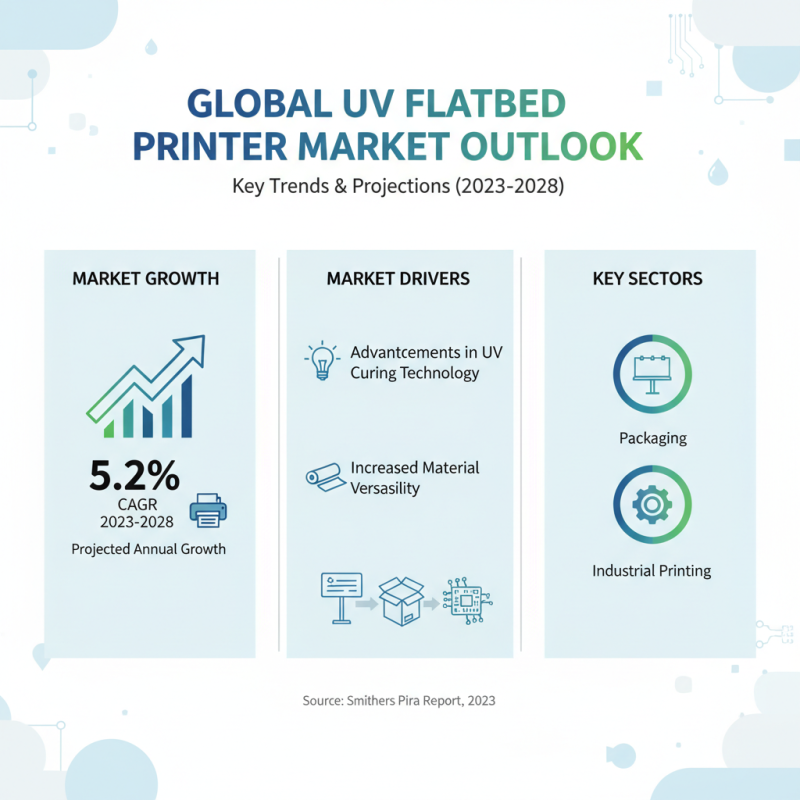
When selecting a UV flatbed printer, understanding the market landscape and brand share is crucial for making an informed decision. According to a recent report by Smithers Pira, the global market for UV flatbed printers is projected to grow at a compound annual growth rate (CAGR) of 5.2% from 2023 to 2028, signaling robust demand across various sectors such as signage, packaging, and industrial printing. This growth is primarily driven by advancements in UV curing technology and increasing versatility in printing materials.
Among the top players in the UV flatbed printer market, a few dominate the landscape in terms of market share. Recent analyses indicate that around 40% of the market is held by the top three brands, which are continuously innovating to meet evolving customer and industry demands. Factors contributing to their success include superior interface design, faster print speeds, and improved color accuracy. Additionally, emerging brands are leveraging strategic partnerships and niche capabilities to carve out their share, accounting for approximately 25% of the market in 2023. Understanding these dynamics can help businesses align their purchasing decisions with brands that not only lead in technology but also fit their specific operational needs.