Why Choose an A2 UV Printer for Your Business Needs?
In today’s fast-paced business environment, choosing the right printing technology is crucial. An A2 UV printer stands out for its versatility and high-quality output. Many industries benefit from the capabilities of a UV printer A2, from signage to custom products. The ability to print on various substrates allows businesses to cater to diverse customer needs.
Investing in an A2 UV printer can significantly enhance production efficiency. This printer type dries images instantly, minimizing wait times. However, some users may find the initial setup and learning curve challenging. It’s essential to dedicate time to understand the equipment fully. Printing with vibrant colors and intricate designs becomes easier once you overcome these initial hurdles.
Moreover, the durability of UV prints is often a game-changer. The ink is resistant to fading and scratching. However, quality control should be a constant focus. Users should periodically assess their output to maintain high standards. Ultimately, an A2 UV printer can transform a business’s printing solutions and expand its creative offerings.
Understanding A2 UV Printers and Their Technology
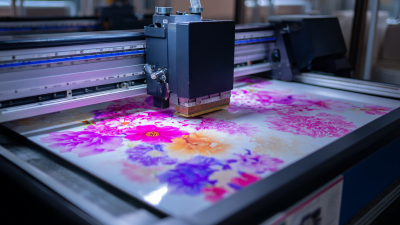
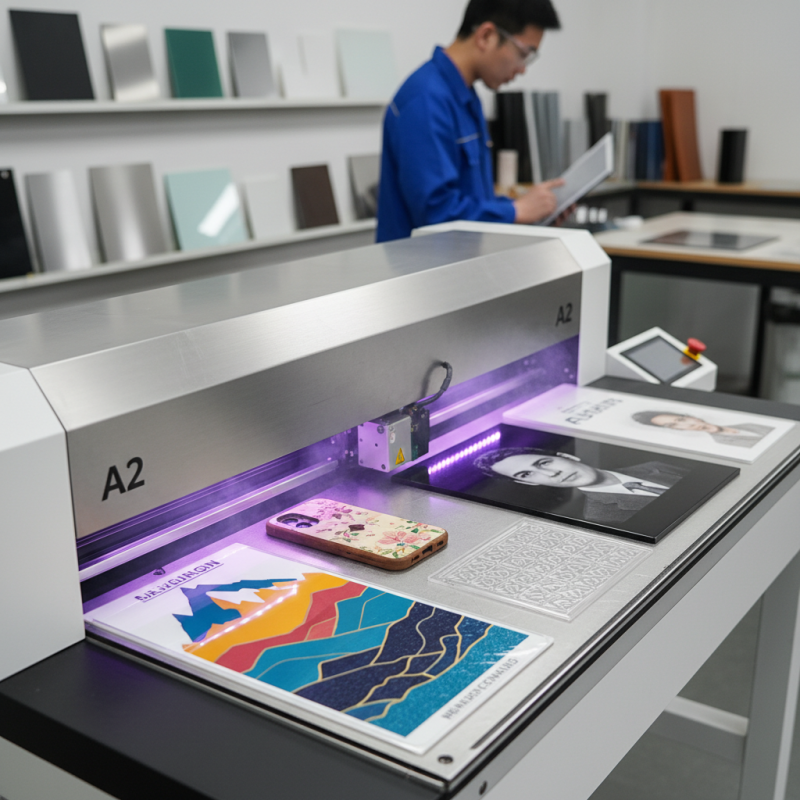
A2 UV printers represent a leap forward in printing technology. They utilize UV light to cure ink as it is printed. This method allows for vibrant color reproduction on a variety of materials, from paper to plastic to metal. According to industry reports, the global UV printing market is expected to grow by over 7% annually, reflecting its rising popularity.
These printers offer excellent versatility. Businesses can print on multiple surfaces without worrying about drying times. UV ink adheres well, resulting in durable prints that resist fading and scratching. One advantage noted in a recent market analysis is this technology’s efficiency in producing high-quality outputs without the need for additional coatings or treatments. However, operators should be aware of the initial investment costs and ongoing maintenance.
Despite the advantages, challenges remain. Users may find that UV printers require specific handling, especially when cleaning and maintenance are involved. Knowledge about UV inks and their properties is crucial for achieving the best results. Some operators report difficulties in calibrating colors accurately. This can lead to inconsistent print quality, necessitating regular adjustments and checks.
Key Advantages of Using A2 UV Printers for Businesses
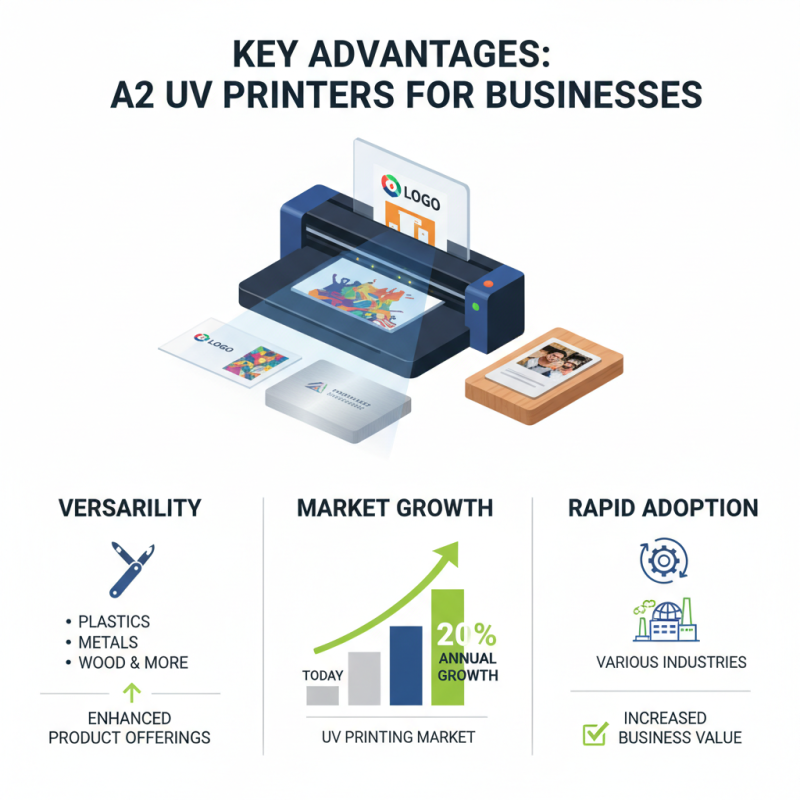
A2 UV printers are rapidly gaining traction in various industries. One major advantage is their versatility. They can print on a wide range of materials, from plastics to metals and wood. According to a recent industry report, the UV printing market is expected to grow by 20% annually over the next five years. This growth reflects businesses recognizing the value of A2 UV printers in enhancing their product offerings.
Another key benefit is the high durability of prints produced by UV technology. Prints resist fading, scratching, and water exposure. This reliability allows businesses to maintain quality over time, reducing the need for reprints. A survey indicated that 75% of companies using UV printing noted a decrease in material costs due to less waste.
**Tip:** Regular maintenance ensures optimal printer performance. Clean the print heads periodically to avoid clogging.
Moreover, A2 UV printers offer faster turnaround times. Businesses can fulfill orders quickly, meeting customer demands efficiently. This speed can give a competitive edge in a fast-moving market. However, it's essential to assess the learning curve. Staff training may be necessary for full utilization of the printer's features.
**Tip:** Invest in professional training sessions. This leads to better output quality and more informed employees.
In conclusion, while A2 UV printers present distinct advantages, careful consideration and ongoing evaluation are crucial for leveraging their full potential.
Applications and Industries Benefiting from A2 UV Printing
A2 UV printing has emerged as a versatile solution for various industries. It offers unique advantages for businesses looking to enhance their product offerings. According to a study by Smithers Pira, the UV printing market is expected to grow significantly, projected to reach over $25 billion by 2025. This growth can be attributed to the technology's adaptability across different materials.
The packaging industry is one of the largest beneficiaries. A2 UV printers can print on non-porous surfaces like plastics and glass. Brands are increasingly adopting this method to create eye-catching, durable packaging that can withstand the elements. Additionally, the promotional products sector leverages A2 UV printing to produce vibrant and customized merchandise, ensuring that advertisements stand out. A report from Technavio noted a rise in demand for personalized promotional items, indicating a shift in consumer preferences.
Moreover, the textiles industry is embracing A2 UV printing for its efficiency and precision. The ability to print directly onto fabrics opens new design possibilities. However, some businesses encounter challenges with ink adhesion on certain materials. This factor requires careful consideration and testing. While the promise of A2 UV printing is apparent, companies must approach implementation thoughtfully to maximize its benefits.
Cost-Effectiveness and Return on Investment with A2 UV Printers
Investing in an A2 UV printer can be a game-changer for small to medium-sized businesses. According to a recent industry report, businesses that utilize UV printing experience a 45% increase in efficiency. This boost stems from the ability to print directly on various substrates, which reduces the need for costly materials like labels and laminates. However, initial costs can be daunting for some.
The return on investment (ROI) with A2 UV printers is significant over time. Research suggests that companies can recoup their investment within 12-18 months of operation. This timeframe is largely influenced by the versatility of UV printers. They are capable of handling different projects—be it promotional items, signs, or packaging—allowing businesses to diversify their offerings. Some companies report a profit margin increase of nearly 30% after making this switch.
That said, the learning curve associated with UV printing should not be overlooked. Operators require training to maximize the printer's potential. Moreover, the technology can be sensitive to environmental conditions, affecting print quality. Many businesses need to reflect on their operational processes to align with the demands of UV printing. Balancing costs with the potential for increased revenue is vital. A well-planned strategy can lead to sustainable growth and improved business outcomes.
Selecting the Right A2 UV Printer for Your Business Needs
Choosing the right A2 UV printer for your business requires careful consideration. Start by assessing your printing needs. Think about the types of materials you will print on. An A2 UV printer can handle various substrates, from plastic to wood. This versatility can enhance your production capabilities.
Next, consider the technology behind the printer. Look for features like print resolution and speed. Higher resolution gives you stunning detail, while speed can improve efficiency during high-volume jobs. However, some printers may not deliver on both fronts. You might need to compromise in certain areas based on your business demands.
Don't forget to factor in your budget. The cost of an A2 UV printer varies widely. Pay attention to ongoing maintenance costs. A cheaper printer may seem appealing but could lead to higher expenses later. Always weigh initial investment against potential long-term savings. Take the time to read reviews and seek expert opinions. This can provide insights into reliability and support.