What is A2 Uv Printer and How Does It Impact Your Business?
In the realm of digital printing, the A2 UV Printer stands out as a game-changer. Industry expert John Smith, a leading authority in printing technologies, once stated, "The A2 UV Printer transforms how businesses approach custom printing." This statement highlights the printer's innovative capability to produce high-quality prints on various materials.
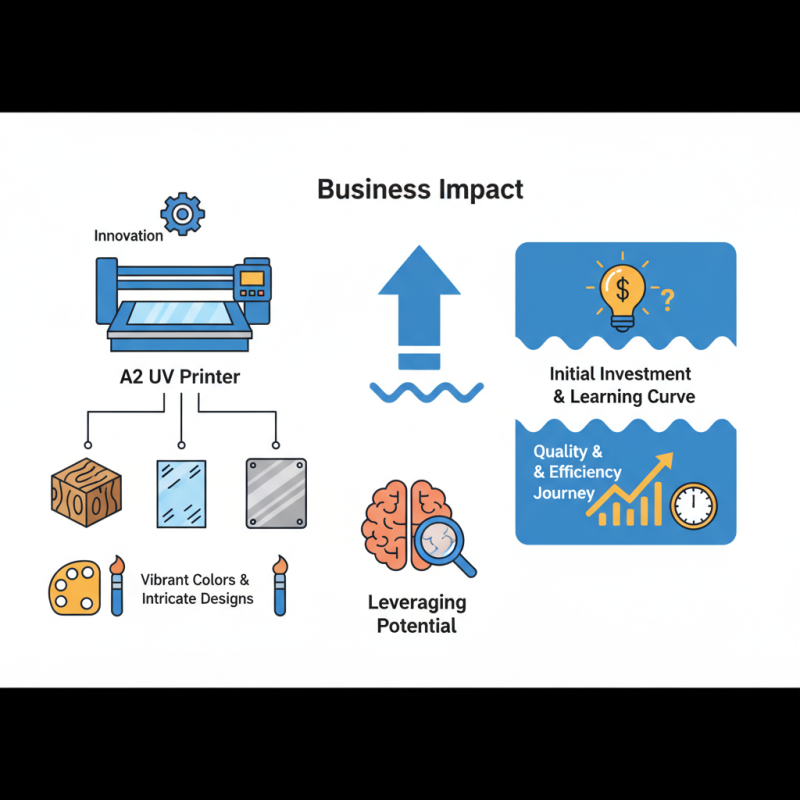
Businesses are embracing the A2 UV Printer to enhance their product offerings. It allows for vibrant colors and intricate designs that draw customer attention. Companies can print on surfaces like wood, glass, and metal, which broadens creative possibilities. However, adapting to this technology can be challenging. Investing in new equipment requires careful consideration and planning.
Many businesses may find themselves overwhelmed by initial costs and the learning curve involved. While the results can be impressive, mastering the A2 UV Printer demands time and expertise. Balancing quality and efficiency is a journey that every business owner must navigate. Understanding these aspects is crucial for leveraging this technology to its fullest potential.
What is an A2 UV Printer?
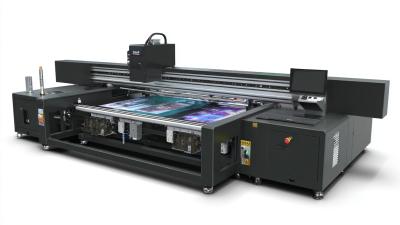
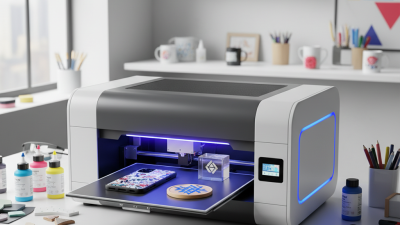
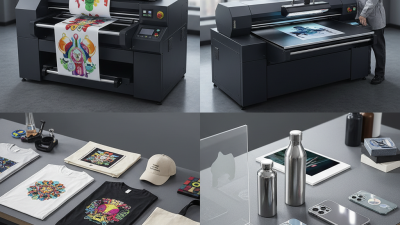
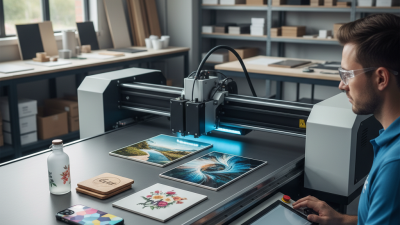
An A2 UV printer is a versatile printing machine that uses ultraviolet light to cure or dry the ink as it is printed. This process allows for high-quality prints on a variety of surfaces, including wood, metal, glass, and acrylic. A2 refers to the size capability of the printer, allowing for prints that measure up to 420 x 594 mm. The ability to print on different materials opens up new opportunities for businesses seeking to expand their product offerings.
In a rapidly evolving market, A2 UV printers can enhance a company's competitive edge. They facilitate on-demand printing, which is crucial for businesses with limited stock or those that want to meet client-specific requirements. The technology is reliable and produces vibrant colors while enabling customization options, which is integral in attracting customers. However, the initial investment in A2 UV printing technology can be significant.
Using this equipment requires expertise in handling both the printer and the software. Not everyone in the industry is well-versed in these aspects. As businesses adopt this technology, they must consider training for their staff and the learning curve involved. It's essential to reflect on these challenges when integrating A2 UV printers into existing operations, as they can impact overall efficiency and employee satisfaction.
What is A2 UV Printer and How Does It Impact Your Business?
| Feature |
Details |
| Print Size |
A2 (420 x 594 mm) |
| Print Technology |
UV LED Printing |
| Ink Type |
Eco-friendly UV Ink |
| Material Compatibility |
Wood, Metal, Glass, Acrylic, Fabric |
| Print Resolution |
Up to 1440 dpi |
| Benefits |
High durability, vibrant colors, versatility in materials |
| Impact on Business |
Enhances product offerings, improves customer satisfaction, increases operational efficiency |
Key Features and Technologies of A2 UV Printers
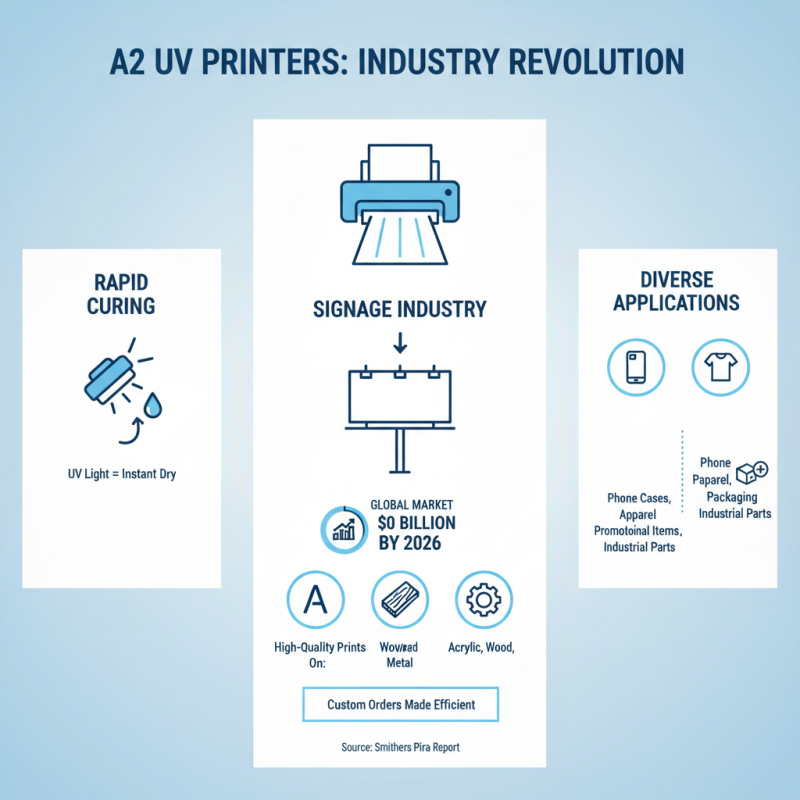
A2 UV printers have revolutionized the printing landscape. Their ability to print on various materials sets them apart. These printers use ultraviolet light to cure inks instantly. This feature allows for quick production times, making them ideal for fast-paced environments. High-quality results are a hallmark of A2 UV printers, which excel at vibrant colors and fine details.
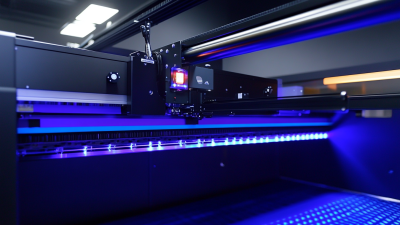
One key technology is LED UV curing. This method minimizes energy consumption and reduces heat generation. Such efficiency is crucial for extending the lifespan of both the printer and the materials used. However, potential users should consider the upfront costs. While A2 printers save time, the initial investment may be daunting. Moreover, maintenance can pose challenges for some businesses. Understanding these factors is essential to evaluate whether an A2 UV printer aligns with your operational needs.
Another important feature is versatility. A2 UV printers can work with wood, metal, and glass, providing extensive options. This capability allows businesses to expand their service offerings. Yet, it is vital to note that mastering this machinery requires skill. Training employees adequately ensures operability. The learning curve may be steep, but skilled staff can help maximize the printer's potential.
Applications of A2 UV Printers in Various Industries
A2 UV printers have revolutionized various industries, offering diverse applications that enhance productivity. These printers use ultraviolet light to cure inks rapidly. One significant application is in the signage industry. According to a report by Smithers Pira, the global signage market is projected to reach $50 billion by 2026. A2 UV printers enable high-quality prints on a wide range of materials, such as acrylic, wood, and metal. This versatility allows businesses to cater to custom orders more efficiently.
Another area impacted by A2 UV printers is packaging. The demand for customized packaging solutions is rising. A study from Technavio indicates that the global packaging market will grow by over $400 billion by 2025. A2 UV printers facilitate short runs of personalized packaging, which can lead to higher customer engagement. However, the initial investment in A2 UV technology can be daunting for some companies.
In the promotional products sector, A2 UV printing offers rapid turnarounds. Businesses can create bespoke items quickly. A survey by IBISWorld highlights a growing trend, with promotional products expected to reach a market size of around $23 billion. However, the challenge lies in staying competitive. Companies must continually adapt to rapidly changing trends. This may require investment in employee training and equipment upgrades to maximize the potential of A2 UV printing technology.
Benefits of Using A2 UV Printers for Business Growth
A2 UV printers are redefining the printing landscape for businesses. Their versatility allows for printing on various materials like wood, glass, and metal, which expands product options. This capability can attract a wider customer base, enhancing sales potential. The vibrancy and durability of UV prints stand out, leaving a lasting impression on customers.
Utilizing A2 UV printers can also streamline production. For small-to-medium businesses, the ability to produce high-quality prints in-house saves time and costs. However, not every business might need the advanced features. Companies may need to assess their specific printing needs carefully. Sometimes, opting for a smaller-scale solution could be more efficient based on their output requirements.
Environmental considerations are another factor. UV printing uses less energy and fewer volatile organic compounds (VOCs) compared to traditional methods. However, not all A2 UV printers are created equally. Businesses must do their research to find a reliable option that meets their sustainability goals. Ultimately, the right A2 UV printer can spur growth but requires careful thought and planning.
Challenges and Considerations in Adopting A2 UV Printing Technology
Adopting A2 UV printing technology can present significant challenges. One major concern is the initial investment. The cost of quality A2 UV printers can be high, and businesses need to consider their budget carefully. Before jumping in, it’s essential to evaluate if the potential for increased revenue justifies the expense.
Another challenge lies in training staff. Familiarity with new technology doesn't come instantly. Employees must adapt to the unique operational requirements of A2 UV printers, which may lead to initial inefficiencies.
Maintenance is another critical consideration. A2 UV printers require regular upkeep to function optimally. This includes cleaning and replacing components, which can be time-consuming. Failure to maintain the equipment can lead to printing errors or a decline in print quality.
Moreover, environmental factors can affect UV printing. The printer must operate in specific temperature and humidity settings. These conditions can be hard to control in some environments, potentially impacting print results. Every business must weigh these challenges against the innovative advantages that A2 UV printing can offer.